How Advanced Eye Measurement Improves Contact Lens Fitting
What makes modern eye examinations more precise than before?
Eye examinations have advanced significantly in recent years. In 2018, Schöne Brillen & Professional Optometry introduced a 3D precision eye test, which was met with enthusiastic feedback from hundreds of customers. The high level of professional expertise was reflected in an average customer rating of 4.80 out of 5.00.
In early 2020, the practice took the next step forward, introducing a technology that is especially beneficial for contact lens wearers.
What is the Oculus Keratograph?
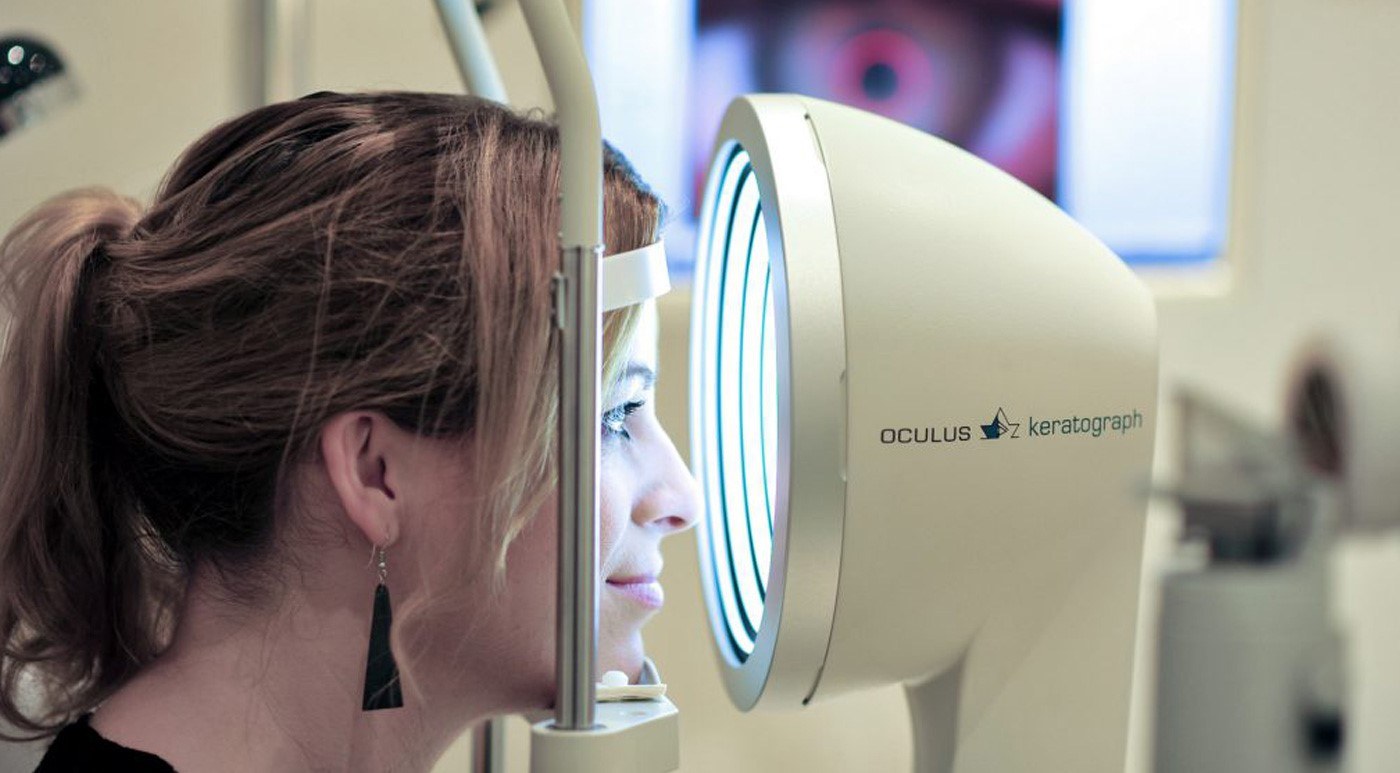
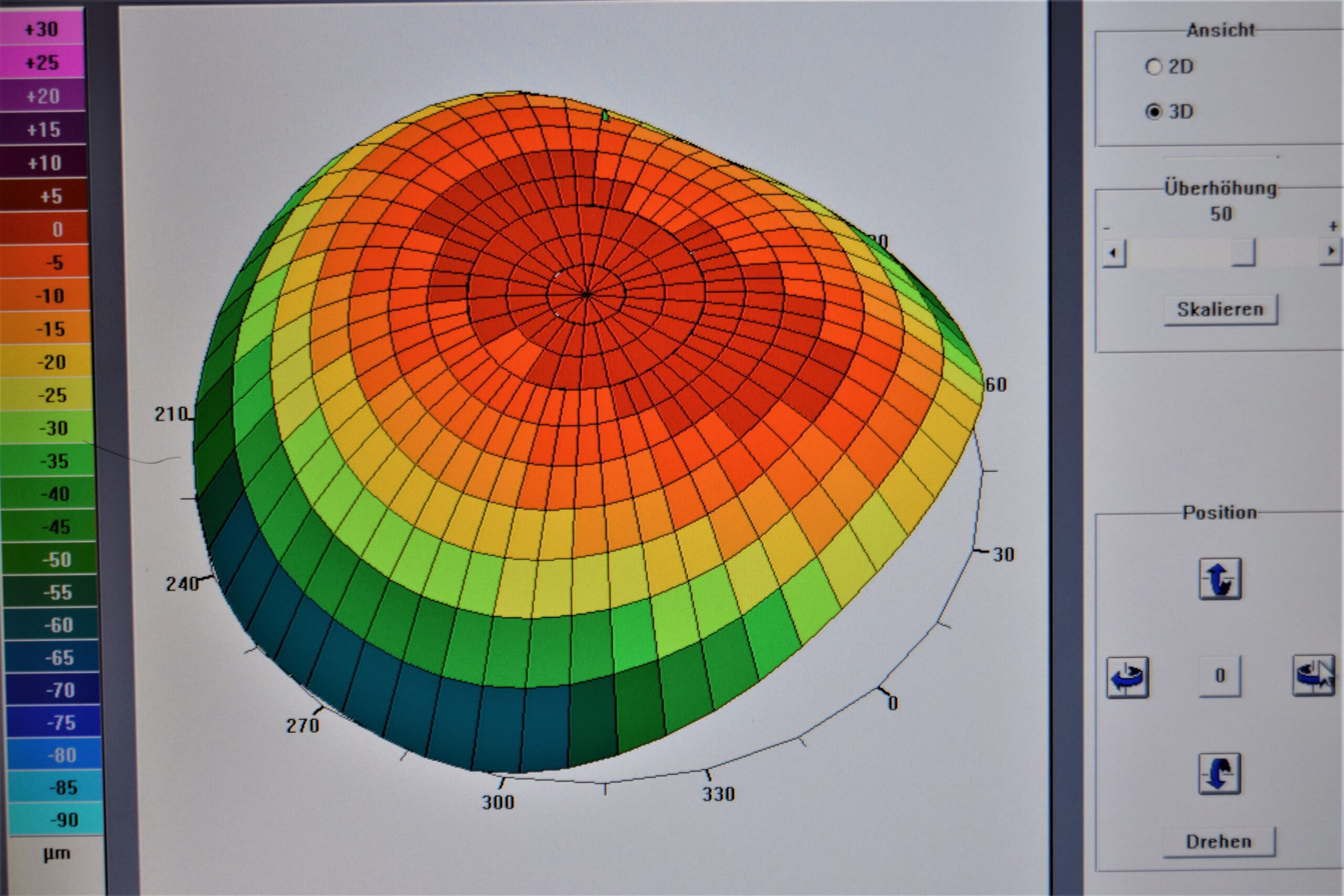
The Oculus Keratograph is a state-of-the-art diagnostic device used to measure the surface of the cornea with extremely high precision.
It captures 22,000 individual measurement points under three different lighting conditions, allowing the corneal surface to be mapped with an accuracy of up to one hundredth of a millimetre.
These measurements provide a highly detailed picture of the eye, far beyond what traditional methods can offer.
How does the Keratograph measurement work?
The measurement process is:
-
Fast
-
Contactless
-
Fully automated
Once the measurement is triggered, the device records data automatically, which ensures high reproducibility. This means results are consistent and comparable over time.
After the scan, the data is analysed using specialised computer software. This allows the optometrist to track changes in the eye over the years and detect abnormalities at an early stage, including conditions such as keratoconus.

Why is contactless measurement important?
Contactless measurement improves both comfort and accuracy.
Because the eye is not physically touched:
-
The risk of irritation is reduced
-
Measurements are more reliable
-
The examination is more comfortable, especially for sensitive eyes
This is particularly important for contact lens wearers and patients who require regular follow-up examinations.
Why is corneal measurement so important for contact lenses?
Every eye is unique. Even small differences in corneal shape can have a significant impact on how a contact lens fits and feels.
A precise measurement of both:
-
Refractive error
-
Corneal surface shape
is the foundation of a successful contact lens fitting.
Even for standard daily or monthly contact lenses, there is a wide range of options, including:
-
different manufacturers
-
lens designs
-
materials
-
base curves
-
edge profiles
-
diameters
-
lens powers
Without accurate measurements, selecting the optimal lens becomes guesswork.

What about specialised contact lenses?
For specialised contact lenses, precision becomes even more critical.
These include:
-
orthokeratology lenses worn at night
-
lenses after eye surgery
-
lenses for keratoconus
-
rigid gas permeable lenses
-
hybrid lenses
In these cases, many additional parameters must be considered. The Keratograph provides the detailed data needed to customise these lenses accurately and safely.
How does wavefront analysis improve vision quality?
In addition to corneal mapping, the Oculus Keratograph supports wavefront analysis.
Wavefront analysis goes beyond standard vision testing by detecting subtle optical imperfections in the eye that can affect visual quality, such as:
-
glare
-
halos
-
reduced contrast
-
visual fatigue
This information helps refine contact lens fitting and can also improve spectacle lens selection.
Can the Keratograph be used for long-term eye monitoring?
Yes. One of the key advantages of this technology is its ability to support long-term monitoring.
Because measurements are highly reproducible, optometrists can:
-
compare scans over multiple years
-
identify small changes early
-
monitor disease progression
-
support preventive eye care
This makes the Keratograph a valuable diagnostic tool not only for contact lens fitting, but also for general eye health.
Does the Keratograph also analyse the tear film?
Yes. The device can perform a tear film analysis, which is especially important for patients suffering from dry eyes or contact lens discomfort.
By analysing tear film stability, optometrists can:
-
identify dry eye issues
-
adjust lens material choices
-
recommend appropriate treatments
-
improve wearing comfort
How does this technology improve collaboration with eye doctors?
The detailed data provided by the Keratograph enhances collaboration between optometrists and ophthalmologists.
When necessary, measurement results can support:
-
referrals
-
medical diagnosis
-
treatment planning
-
follow-up care
This leads to better continuity of care and improved outcomes for patients.
Who benefits most from advanced corneal measurement?
Advanced corneal measurement is particularly beneficial for:
-
contact lens wearers
-
patients with complex vision needs
-
people with irregular corneas
-
patients with dry eye symptoms
-
anyone seeking the highest possible visual precision
However, even people who only wear glasses can benefit from more accurate diagnostics.
Final thoughts, why precision matters
Modern eye care is no longer just about seeing clearly. It is about seeing comfortably, safely, and sustainably over time.
Advanced technologies like the Oculus Keratograph allow optometrists to:
-
tailor vision correction more precisely
-
detect issues earlier
-
improve long-term eye health
-
provide a higher standard of care
For patients, this means better comfort, better vision, and greater confidence in their eye care.
If you wear contact lenses or are considering them, a precision-based eye examination can make a meaningful difference.
If you want to give this top-of-the-line device a try, book an appointment at Schöne Brillen, Meilen today.